
When the confetti rained down upon the New York New Jersey Stadium to crown Spain as the 2026 FIFA World Cup champions, it marked the conclusion of a deeply historic, marathon tournament. Yet, long after the echoes of the final whistle fade and the tactical autopsies of the heavyweight clashes are completed, the true legacy of this expansive global festival will not be solely defined by the traditional footballing aristocracy. Instead, North America 2026 will be permanently remembered as the tournament where the underdogs bared their teeth, where debutants silenced their critics, and where football’s global middle class proved they could go toe-to-toe with the sport’s most established giants.
When FIFA formally announced that the 2026 iteration of the tournament would expand from the traditional 32-team format to a sprawling 48-nation spectacle consisting of 104 matches, the decision was met with a loud chorus of scepticism. Traditionalists and European purists argued that diluting the qualification process would inherently reduce the overall quality of the group stages, resulting in a series of uncompetitive, heavily lopsided fixtures.
Over the past five weeks, the so-called minnows of world football systematically dismantled that exact narrative. The expanded format did not water down the competition; it democratised it, offering a platform for unprecedented fairytale runs and moments of individual brilliance that captivated audiences from Miami to Vancouver.
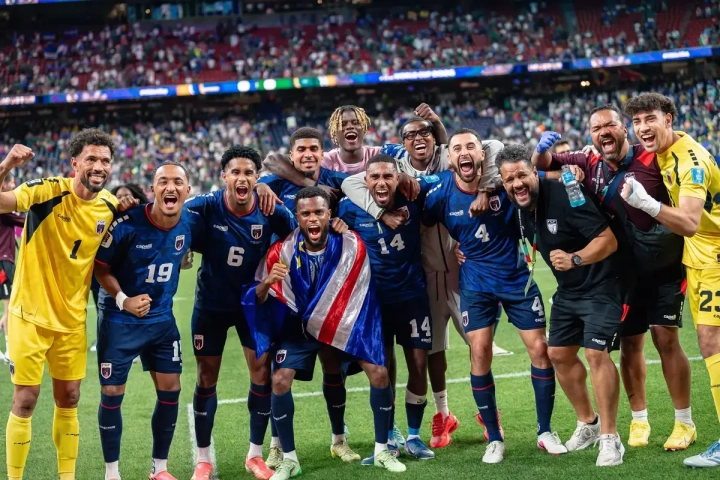
The Blue Sharks Bite: Cape Verde’s Astonishing Debut
Prior to June, a significant portion of the global footballing audience would have struggled to identify Cape Verde on a map. The tiny archipelago nation off the west coast of Africa arrived at their very first World Cup heavily tipped to be the whipping boys of Group H. Placed alongside eventual champions Spain, two-time winners Uruguay, and a deeply resourced Saudi Arabia side, the expectations for the Blue Sharks were strictly rooted in mere participation.
What unfolded instead was the most captivating underdog story of the modern era. In their opening match against a Spanish side renowned for their suffocating possession, Cape Verde executed a masterclass in tactical discipline and defensive resilience to secure a stunning 0-0 draw. The anchor of that historic result was Vozinha. At 40 years of age, the veteran shot-stopper defied logic, making a string of vital interventions to become the oldest goalkeeper in the tournament’s history to keep a clean sheet on his World Cup debut.
The heroics did not stop there. Refusing to be a one-hit wonder, Cape Verde subsequently secured a thrilling 2-2 draw with Uruguay and played out another goalless stalemate against Saudi Arabia. Advancing to the Round of 32 without suffering a single defeat, their reward was a daunting clash against defending champions Argentina.
Against a Lionel Messi-led side expected to brush them aside with ease, Cape Verde delivered a performance for the ages. Pushing the reigning world champions to their absolute physical and psychological limits, they forced the tie into extra time. Although they ultimately succumbed to a heartbreaking 3-2 defeat, they returned to Africa as national heroes.
“I feel pride in my players and what they did. They did it with dignity and courage.” – Cape Verde head coach Bubista, following the Round of 32 defeat to Argentina.
Norway’s Resurgence and the Viking Row Phenomenon
While Norway may boast one of the most prolific strikers in world football in Erling Haaland, their 28-year absence from the global stage meant they arrived in North America as an unknown tournament entity. Following a group stage campaign that featured composed victories over Iraq and Senegal, alongside a narrow defeat to France, the Norwegians entered the knockout phases with mounting confidence.
It was during these sudden-death fixtures that Norway authored some of the tournament’s most seismic shocks. In the Round of 32, they dispatched a deeply talented Ivory Coast side 2-1. However, it was their Round of 16 encounter that sent genuine shockwaves around the globe. Facing a heavily favoured Brazilian squad, Norway executed a flawless counter-attacking strategy to secure a monumental 2-1 victory, sending the five-time champions crashing out of the tournament prematurely. Norway’s incredible run only came to an end in the quarter-finals, where they were narrowly defeated 2-1 by England following a gruelling period of extra time.
Beyond their on-pitch heroics, Norway’s travelling support inadvertently created the defining cultural phenomenon of the 2026 World Cup. The “Viking Row”, a post-match celebration featuring thousands of supporters moving in perfect synchronisation, chanting while mimicking the rowing of a longship, went entirely viral. Escaping the confines of the stadiums, the celebration was replicated by fans across iconic American landmarks, entirely taking over Times Square in New York, the sun-drenched promenades of Miami Beach, and the streets of Dallas.
Curaçao and the Masters of the Goal-Line
For the absolute smallest nations in the 48-team format, simply scoring a goal or earning a point represented a monumental national triumph. Curaçao, an island nation with a population of roughly 150,000, perfectly epitomised this unyielding spirit.
They suffered a punishing reality check in their opening fixture, enduring a 7-1 defeat at the hands of a ruthless German side. Yet, amidst the heavy loss, history was made. Livano Comenencia’s 21st-minute strike ensured that Curaçao became the smallest nation to ever score a goal at the men’s FIFA World Cup, sparking scenes of unbridled joy on the bench.
The Caribbean nation quickly regrouped to secure their first-ever World Cup point in a hard-fought 1-1 draw with Ecuador. That result was entirely owed to an astonishing individual performance from goalkeeper Eloy Room, who produced a staggering 16 saves, officially setting a new record for a standard 90-minute World Cup fixture.
Room was not the only goalkeeper from a smaller nation to claim global headlines. Iran’s Alireza Beiranvand produced a similar masterclass, single-handedly keeping a star-studded Belgian attack at bay to secure a heroic 0-0 draw in Group G, proving once again that a highly organised defence can neutralise the world’s most expensive attacking talents.
Resilience Across the Board
The depth of competitive underdog performances was a consistent theme across all twelve groups. The Democratic Republic of Congo navigated a fiercely competitive Group K, securing a 3-1 victory over Uzbekistan and advancing to the Round of 32. Facing Thomas Tuchel’s England, the African nation provided a massive scare, battling intensely before eventually succumbing to a narrow 2-1 defeat in Atlanta.
Similarly, South Africa proved their mettle in Group A, navigating past South Korea and the Czech Republic to reach the knockout stages, further highlighting the rapidly closing gap between the established European and South American heavyweights and the rest of the footballing globe.
A Democratic Future for Global Football
As the global footballing calendar pivots back toward the domestic leagues, the legacy of the 2026 FIFA World Cup is secure. The logistical hurdles of a 104-match tournament spanning three massive nations were thoroughly eclipsed by the sheer romance of the narratives it produced.
The expansion to 48 teams was a high-stakes gamble by FIFA, but it is one that has unequivocally paid off in sporting terms. By opening the door to teams like Cape Verde and Curaçao, the tournament reconnected with its most foundational, romantic ideal: that on any given day, eleven men from a tiny island nation can step onto the pitch and frustrate the greatest superstars the world has to offer.
The giants may have ultimately contested the final in New Jersey, but the soul of the 2026 World Cup belonged entirely to the underdogs. They proved that the beautiful game is more global, more competitive, and more wildly unpredictable than ever before.