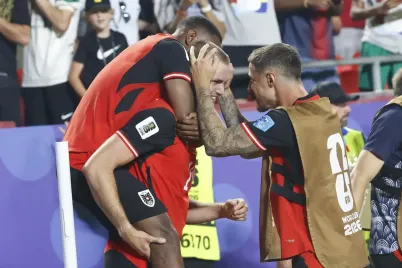

France opened their 2026 FIFA World Cup campaign with a 3-1 victory over Senegal at MetLife Stadium in East Rutherford, New Jersey, but the final score only told part of the story. For long periods, particularly during a fascinating and highly competitive first half, Senegal looked capable of producing one of the tournament’s earliest shocks. They pressed aggressively, created the clearer chances and frustrated a French side packed with world-class talent. Yet football at the highest level is often decided by moments rather than momentum, and once France found their rhythm after the interval, the quality of Michael Olise and Kylian Mbappé ultimately proved decisive.
The meeting carried considerable historical significance. More than two decades had passed since Senegal stunned France in the opening match of the 2002 World Cup, a result that remains one of the most famous upsets in the tournament’s history. While the players on the pitch belonged to a different generation, the memories of that famous evening remained part of the build-up. France arrived as one of the leading contenders for the trophy, while Senegal entered the competition determined to demonstrate that they belonged among the elite nations competing on football’s biggest stage.
From the opening whistle, it became clear that Senegal had no intention of simply defending and hoping for opportunities. Pape Thiaw’s side played with confidence, energy and ambition. Their pressing game disrupted France’s attempts to build attacks from deep positions, and their midfield trio worked tirelessly to close spaces and force mistakes. The early exchanges belonged largely to the African side, who looked sharper and more aggressive than their opponents.
France, meanwhile, appeared unusually tentative. Didier Deschamps’ team enjoyed periods of possession but struggled to translate territorial control into meaningful opportunities. Mbappé, captaining the side and carrying the expectations of an entire nation, found himself crowded out whenever he attempted to accelerate into dangerous areas. Ousmane Dembélé and Désiré Doué were similarly restricted by Senegal’s disciplined defensive structure.
The first major warning sign for France arrived when Senegal broke forward at pace and exposed vulnerabilities within the French back line. Nicolas Jackson’s movement caused problems throughout the opening period, while Ismaïla Sarr repeatedly found space in advanced areas. The Senegal forwards looked capable of turning defensive recoveries into attacking opportunities within seconds, forcing France’s defenders to remain alert.
As the first half progressed, Senegal increasingly believed that a breakthrough was possible. They created the best opportunities before the interval and arguably should have taken the lead. Jackson came painfully close when an effort struck the woodwork, while Sarr was presented with a glorious chance that will undoubtedly haunt him for some time. Positioned inside the penalty area with the goal at his mercy, the winger failed to convert, allowing France to escape a moment that could have dramatically altered the course of the match.
The missed chances became a recurring theme of the evening. Senegal’s approach was brave and effective, but against elite opposition opportunities rarely arrive in abundance. Every failure to convert carried increasing significance as the match wore on.
For France, the first half was disappointing. Their midfield struggled to establish authority, the attacking movement lacked cohesion and the overall performance fell below the standards expected from a team widely considered one of the favourites to lift the trophy. The goalless scoreline at half-time arguably flattered Les Bleus, who walked off knowing they had been second best for large portions of the opening 45 minutes.
Whatever adjustments were made during the break produced an immediate improvement. France emerged with greater urgency and clarity. The passing became quicker, the movement more intelligent and the attacking combinations more dangerous. Central to that transformation was Michael Olise.
The gifted playmaker gradually began to influence proceedings from more central areas, finding pockets of space that had previously been unavailable. His ability to receive possession under pressure and immediately turn defence into attack changed the entire dynamic of the contest. Suddenly, Senegal were being forced backwards rather than pressing forwards.
The momentum shift did not happen instantly, but it became increasingly noticeable. France began creating openings with greater regularity, and the confidence that had been absent before the interval slowly returned. Mbappé looked more involved, Dembélé found opportunities to run at defenders and the midfield started winning second balls that had previously belonged to Senegal.
Even so, Senegal remained dangerous. Their defensive organisation continued to impress, with captain Kalidou Koulibaly producing a commanding display at the heart of the back line. Goalkeeper Édouard Mendy was equally assured whenever called upon, making several important interventions to keep the match level.
A controversial moment arrived when France appealed strongly for a penalty following a challenge involving Mbappé inside the area. French players and supporters believed they had a strong case, but after review no spot-kick was awarded. The decision generated animated reactions and added another layer of drama to an already tense contest.
The breakthrough eventually arrived in the 66th minute and showcased precisely why France remain among the most feared teams in international football. Olise, whose influence had grown steadily throughout the second half, collected possession and delivered a superb outside-of-the-foot pass that split the Senegal defence. The timing, weight and vision of the assist were exceptional.
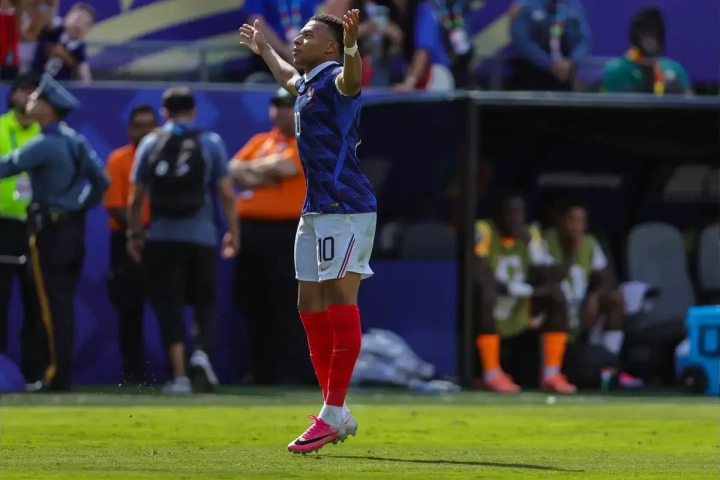
Mbappé recognised the opportunity immediately. Timing his run perfectly, he met the pass with confidence and guided a first-time finish beyond Mendy and into the far corner. It was a moment of genuine quality from two elite players and the kind of move capable of deciding matches at the highest level. After a difficult opening hour, France suddenly had the lead.
The goal altered the psychological balance of the game. France looked liberated, while Senegal faced the challenge of chasing a match they had spent so long controlling. To their credit, the African side refused to retreat into disappointment. Instead, they continued to attack and search for an equaliser.
As Senegal pushed forward, spaces inevitably appeared at the other end. France began exploiting those gaps with increasing frequency. Substitute Bradley Barcola injected fresh energy into the attack and immediately looked dangerous whenever he received possession.
His contribution proved decisive in the closing stages. With Senegal committing more players forward, France launched a swift counterattack that exposed the defensive gaps left behind. The move culminated with Barcola producing a composed finish to double the advantage and place France firmly in control of the contest. The goal was both a reward for France’s growing dominance and a harsh punishment for a Senegal side forced to take risks in pursuit of an equaliser.
Yet the drama was far from over. Senegal continued to fight and were rewarded for their persistence during stoppage time. Ibrahim Mbaye found the net to reduce the deficit and briefly reignite hopes of an unlikely comeback. The goal reflected the resilience that had characterised Senegal’s performance throughout the evening and ensured the final moments remained tense.
Any lingering uncertainty disappeared moments later when Mbappé produced another moment of brilliance. Collecting possession outside the penalty area, the France captain unleashed a powerful strike that flew beyond Mendy and into the net. It was a spectacular finish and a fitting conclusion to a performance that once again demonstrated his ability to influence the biggest matches. The goal secured a 3-1 victory and added another milestone to his already remarkable international career.
When the final whistle sounded, relief was visible among the French players. The scoreline suggested a comfortable victory, but those who witnessed the match understood the challenge they had faced. Senegal had tested them thoroughly, particularly during the opening hour, and there were moments when the outcome could easily have been different.
Speaking after the match, Mbappé acknowledged the difficulties France encountered during the contest. The captain highlighted Senegal’s quality and admitted his team had been forced to work hard for the result. He emphasised the importance of beginning the tournament with a victory while also recognising that improvements would be necessary as the competition progresses. His comments reflected both satisfaction and realism, acknowledging that stronger tests may await in the weeks ahead.
Didier Deschamps adopted a similarly measured tone. The France manager praised his players for responding positively after a difficult first half and highlighted the tactical adjustments that helped transform the game. He reserved particular praise for Olise, whose creativity changed the flow of the contest, and for Mbappé, whose finishing ultimately proved decisive.
Deschamps also acknowledged Senegal’s impressive display. He recognised the problems they created and admitted that France had struggled to impose themselves early on. However, he pointed to the squad’s experience and depth as crucial factors in overcoming those challenges and securing the three points.
For Senegal head coach Pape Thiaw, the evening brought understandable disappointment but also reasons for optimism. While frustrated by the result, he praised the commitment and performance of his players. The manager highlighted the quality of the chances created during the first half and acknowledged that greater efficiency in front of goal could have produced a different outcome.
Thiaw also stressed that the tournament remains far from over. His side demonstrated enough quality to suggest they can compete with the strongest teams in the group, and there was a clear sense that the performance deserved more than the final scoreline reflected. The Senegal manager encouraged his players to take confidence from their display while learning the lessons that come from facing one of football’s traditional powers.
Several individual performances stood out across the ninety minutes. Olise’s contribution was arguably the most influential after Mbappé. His vision, creativity and intelligence transformed France’s attacking play and underlined his growing importance within the national team setup. Mbappé, meanwhile, once again showed why he remains one of the defining players of his generation. Even during periods when opportunities were limited, he maintained the ability to produce decisive moments.
For Senegal, Koulibaly delivered a captain’s performance, organising the defence and competing fiercely throughout. Mendy produced several impressive saves, while Jackson and Sarr consistently threatened France’s back line despite the disappointment of missed opportunities.
Ultimately, the match served as a reminder of the fine margins that define major tournaments. Senegal were arguably the better side during the first half and created enough chances to take control of the contest. Yet France possessed the clinical quality required to punish mistakes and capitalise on the opportunities that emerged.
The victory gives France an excellent platform from which to build their World Cup campaign. Opening matches are often among the most difficult in international tournaments, particularly against opponents of Senegal’s calibre. While improvements will be required, the ability to win without producing a flawless performance is often the hallmark of successful teams.
For Senegal, there was frustration but also encouragement. Few teams will create as many problems for France as they managed during large portions of this encounter. If they can replicate the intensity, organisation and attacking intent shown in New Jersey while improving their finishing, they remain well positioned to challenge for qualification from Group I.
In the end, the scoreboard recorded a 3-1 French victory, but the contest itself was far more competitive than that result suggests. Senegal demonstrated why they are respected throughout international football, while France showed why they remain among the favourites to lift the trophy. The combination of tactical intrigue, individual brilliance, controversy, missed chances and late drama ensured that the match provided one of the most entertaining contests of the tournament so far. Most importantly for France, it delivered the result they wanted. Most importantly for Senegal, it offered proof that they have the quality to compete with anyone. As World Cup opening matches go, it was a compelling spectacle that may yet prove significant in shaping the destiny of Group I.