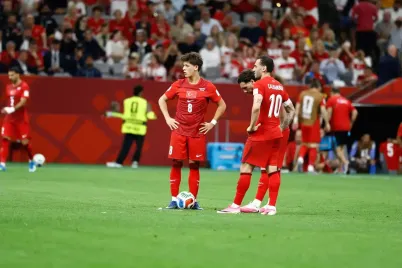

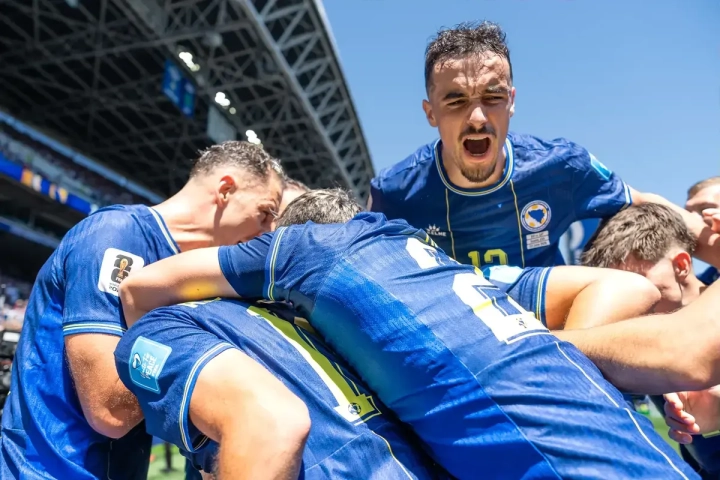
Bosnia and Herzegovina kept their FIFA World Cup hopes alive with a deserved 3-1 victory over Qatar in a dramatic Group B encounter at Seattle’s Lumen Field. In a match carrying huge significance for both nations, Bosnia produced one of their most complete performances of the tournament, combining attacking quality, defensive resilience, and composure under pressure to claim all three points. The result left Qatar’s campaign in ruins while giving Bosnia a realistic chance of progressing to the knockout stages, depending on results elsewhere in the group.
The occasion was particularly memorable for Bosnia captain Edin Džeko, who made his 150th international appearance for his country. The veteran striker, one of the most influential figures in Bosnian football history, led his team onto the pitch knowing that only victory would keep their World Cup ambitions alive. The importance of the contest was evident from the opening whistle as both sides approached the game with urgency and intensity.
Bosnia started brightly and immediately looked determined to dictate proceedings. Their midfield pressed aggressively, forcing Qatar into mistakes and preventing them from establishing any rhythm in possession. The European side controlled large spells of the opening exchanges, moving the ball confidently and creating several promising situations around the Qatari penalty area.
Qatar entered the match under pressure following a heavy defeat in their previous group game, but there was still belief that a victory could produce a remarkable turnaround. Coach Julen Lopetegui had urged his players to show courage and character, and for the first twenty minutes they attempted to stay compact and frustrate Bosnia. However, the pressure gradually intensified as Bosnia continued to push forward.
The breakthrough eventually arrived in the 29th minute through one of the standout moments of the match. Young attacking midfielder Kerim Alajbegović collected possession outside the penalty area and unleashed a powerful strike that flew beyond the goalkeeper and into the net. It was a goal worthy of the occasion, combining technical excellence with confidence and precision. The Bosnian supporters inside the stadium erupted in celebration as their team finally converted its dominance into a tangible reward.
The goal transformed the atmosphere of the contest. Bosnia sensed vulnerability in the Qatari defence and immediately sought a second goal. Just five minutes later, they doubled their advantage through a fortunate but deserved sequence. A dangerous ball delivered into the penalty area created confusion among Qatar’s defenders. Under pressure, defender Sultan Al-Brake inadvertently diverted the ball into his own net. The own goal gave Bosnia a commanding 2-0 lead and appeared to put them in complete control.
At that stage, the match seemed to be slipping away from Qatar. Bosnia were playing with confidence, winning battles across the pitch and moving the ball with authority. Their attacking players found pockets of space, while the defensive line remained organized whenever Qatar attempted to break forward.
Yet football often changes in an instant, and Qatar found a route back into the game shortly before halftime. Veteran captain Hassan Al-Haydos, one of the most respected figures in Qatari football, produced a moment of leadership when his side needed it most. In the 42nd minute, he capitalized on an opportunity inside the box and calmly finished to reduce the deficit to 2-1. The goal injected fresh belief into the Qatari team and altered the mood heading into the interval.
The closing moments of the first half suddenly became much more competitive. Qatar began committing more players forward and showed greater aggression in attack. Bosnia, who had looked comfortable for much of the opening period, were forced to defend deeper and withstand a spell of pressure. When the halftime whistle arrived, the contest remained very much alive.
The second half opened with Qatar looking determined to build on the momentum created by Al-Haydos’ goal. Their midfield played with greater urgency, while attacking stars attempted to stretch the Bosnian defence. For a period, Bosnia found themselves under pressure and struggled to regain the dominance they had enjoyed earlier.
Qatar’s attacking efforts, however, often lacked the final pass or clinical finish required to complete the comeback. Bosnia’s defenders stood firm and continued to make important interventions. The back line remained disciplined, ensuring that Qatar rarely created clear-cut opportunities despite enjoying more possession than they had in the opening half.
As the match entered its final half hour, Bosnia gradually regained control. Their midfielders began winning second balls again, while their forwards successfully held possession higher up the pitch. The game became increasingly stretched as Qatar pushed numbers forward in search of an equalizer, leaving spaces behind for Bosnia to exploit on the counterattack.
Several substitutions added fresh energy to the Bosnian side. The coaching staff recognized the opportunity to secure victory by introducing players capable of maintaining intensity and taking advantage of Qatar’s growing desperation. Those tactical decisions would ultimately prove decisive.
The defining moment arrived in the 80th minute. Following a scrappy sequence inside the penalty area, substitute Ermin Mahmić reacted quickest to a loose ball and guided it into the net. The goal restored Bosnia’s two-goal advantage and effectively ended Qatar’s hopes of mounting a comeback. Bosnian players celebrated passionately, aware that the strike could prove crucial not only for the outcome of the match but potentially for their chances of advancing in the tournament.
The final ten minutes saw Bosnia manage the game professionally. Qatar continued to fight but struggled to generate meaningful opportunities. Fatigue began to affect both teams, with the warm conditions requiring significant physical effort throughout the contest. Bosnia remained organized and disciplined, refusing to allow their opponents any route back into the match.
When the final whistle sounded, Bosnia’s players celebrated a victory that had been built on strong collective performance and efficient finishing. The result represented an important response after their disappointing defeat to Switzerland earlier in the tournament. It also demonstrated the character within the squad, particularly after facing criticism following that setback.
For Qatar, the defeat marked a painful end to a campaign that never truly gathered momentum. Having entered the tournament hoping to make a significant impact, they ultimately struggled with defensive issues and inconsistency. While there were positive moments throughout the group stage, including periods of resilience and the leadership shown by senior players, they were unable to convert those moments into the results needed to remain competitive.
Bosnia manager Sergej Barbarez praised his players after the match, highlighting their determination and commitment in a high-pressure situation. He expressed satisfaction with the way his team responded to adversity and emphasized the importance of maintaining belief after suffering a difficult loss in their previous outing. Barbarez noted that his players showed courage in possession, remained aggressive when pressing, and demonstrated maturity when the match became challenging after Qatar’s first-half goal. He also paid tribute to Edin Džeko on his milestone appearance, describing the captain as a symbol of professionalism and leadership whose influence extends far beyond goals and statistics.
The Bosnian coach acknowledged that qualification was not yet guaranteed but stressed that his players had given themselves an opportunity through hard work and determination. He suggested that the performance reflected the identity he wants his team to develop: organized, competitive, and fearless against any opponent.
Qatar manager Julen Lopetegui understandably expressed disappointment after the defeat. He admitted that conceding two goals in quick succession during the first half made the task extremely difficult. While he praised his team’s reaction following Al-Haydos’ goal and believed they showed improved intensity after halftime, he acknowledged that defensive mistakes proved costly once again. Lopetegui highlighted the effort shown by his players and insisted they continued fighting until the end despite the circumstances.
The Spanish coach also pointed to the progress Qatar has made in reaching the World Cup through qualification rather than as hosts, arguing that the experience gained from competing against strong international opponents would benefit the national team moving forward. Although frustrated by the result, he emphasized the need to learn from mistakes and continue developing younger players who could form the core of future squads.
One of the emotional aspects of the evening involved Hassan Al-Haydos, whose goal briefly reignited Qatar’s hopes. The experienced captain has been a central figure in the country’s football development for many years, and his performance reflected his commitment despite the disappointing outcome. There was also significant attention on Džeko’s landmark appearance, with the veteran striker receiving recognition for his extraordinary service to Bosnian football.
Statistically, Bosnia deserved their victory. They created the better opportunities, controlled key periods of the match, and demonstrated greater efficiency in front of goal. Their ability to respond positively after Qatar reduced the deficit showcased a level of mental strength that had perhaps been questioned after earlier results in the tournament.
Alajbegović’s stunning opener will likely remain one of Bosnia’s standout goals of the competition, while Mahmić’s decisive strike underlined the importance of squad depth and effective substitutions. Defensively, Bosnia also delivered a far more disciplined display than they had managed in their previous outing.
The win moved Bosnia onto four points in Group B and significantly improved their prospects of reaching the knockout rounds. Whether that would ultimately be enough depended on developments elsewhere, but the players left the field knowing they had fulfilled their side of the equation. Rather than exiting quietly, they produced a performance full of determination and quality when it mattered most.
For Qatar, the tournament concluded with disappointment but also valuable lessons. Their campaign highlighted areas requiring improvement, particularly in defensive organization and consistency against top-level opposition. Nevertheless, qualifying for the tournament represented an achievement in itself, and the experience gained by the squad could serve as a foundation for future growth.
As supporters departed the stadium, the contrasting emotions were clear. Bosnian fans celebrated a victory that kept dreams alive and honoured a legendary captain on a historic night. Qatari supporters reflected on what might have been, aware that their team had shown flashes of promise but ultimately fallen short.
In the end, Bosnia and Herzegovina’s combination of attacking quality, tactical discipline, and resilience proved decisive. Goals from Kerim Alajbegović and Ermin Mahmić, along with the unfortunate own goal from Sultan Al-Brake, secured a memorable 3-1 triumph. Qatar fought hard and briefly threatened a comeback through Hassan Al-Haydos, but Bosnia’s overall superiority ensured they claimed the result they desperately needed. It was a night that may yet be remembered as the turning point in Bosnia’s World Cup journey.