

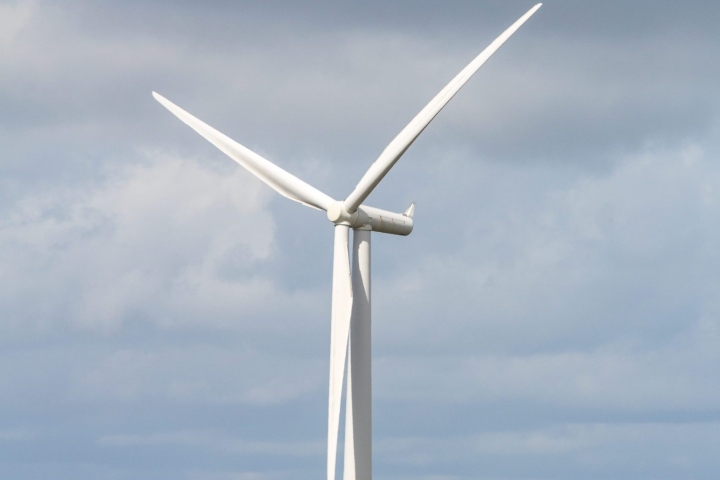
Following the Welsh governments commitment to meeting 100% of the nation’s electricity consumption from renewable resources by 2035. Increasing opportunities exist for Welsh farmers and landowners to explore the role onshore wind could play in the future of their businesses.
With Wales ‘abundant’ wind resource recognised as one of its greatest natural assets, rural landowners are increasingly viewed as key partners in delivering clean power, strengthening energy security and reducing reliance on imported fossil fuels.
In its most recent report, Future Energy Wales: The Critical Role of Welsh Wind Power, the organisation RenewableUK Cymru highlights the opportunities that exist.
RenewableUK Cymru describes onshore wind as “the cheapest and most shovel-ready technology available”, noting that onshore wind and solar projects can typically be delivered more quickly than emerging technologies such as floating offshore wind in the Celtic Sea, which is not expected to contribute at scale until the mid-to-late 2030s.
For the Welsh farming and landowning community, onshore wind presents both a strategic and commercial opportunity.
Before considering any opportunity, farmers need to understand whether their land is suitable for development. Key factors such as grid connection, capacity and availability, planning constraints and location can all have a significant impact on whether a site is viable and attractive to developers. As interest in onshore wind continues to grow, many landowners are seeking independent advice to help assess the potential of their land and understand the options available to them.
“We are seeing strong interest from Welsh farmers who want to discover whether their land has genuine potential for onshore wind development. Questions around grid access, planning considerations and site suitability are often the starting point. These are significant long-term decisions for any farm business, so having access to clear, independent advice from the outset is vital,” says Hans-Georg von Lewinski, Managing Director of Caeli UK, an independent consultancy providing advice to farmers and landowners over the suitability of their land.
Caeli UK’s digital platform provides farmers and landowners with an end to end service which assesses wind energy potential and the viability of sites, taking into account possible planning issues and also connecting landowners with developers, bringing greater transparency to what can often be a complex market.
The onshore wind sector currently supports between 1,800 long-term operational roles in Wales, rising to around 3,000 jobs during peak construction periods. This figure is forecast to increase to as many as 15,000 clean energy jobs by 2030, with many roles based in rural areas across construction, maintenance and local supply chains.
“From a land management perspective, modern wind turbines typically occupy a relatively modest land area per turbine with most surrounding land remaining in agricultural use,” said Mr von Lewinski.
“Developers generally fund all feasibility studies, planning applications, construction, operation and eventual decommissioning. For landowners, this can provide a stable, long-term income stream, often structured through lease agreements spanning several decades,” he added.
Early engagement and thorough assessment are widely regarded as critical to balancing environmental stewardship with renewable energy development.
With Wales positioned at the forefront of the UK’s energy transition, onshore wind is increasingly being viewed not as a constraint on rural land, but as a viable diversification strategy capable of supporting farm resilience, rural employment and national energy security.
As the pathway to 2035 accelerates, the role of Welsh farmers and landowners is set to become more central than ever in delivering a cleaner, more self-sufficient energy future.