

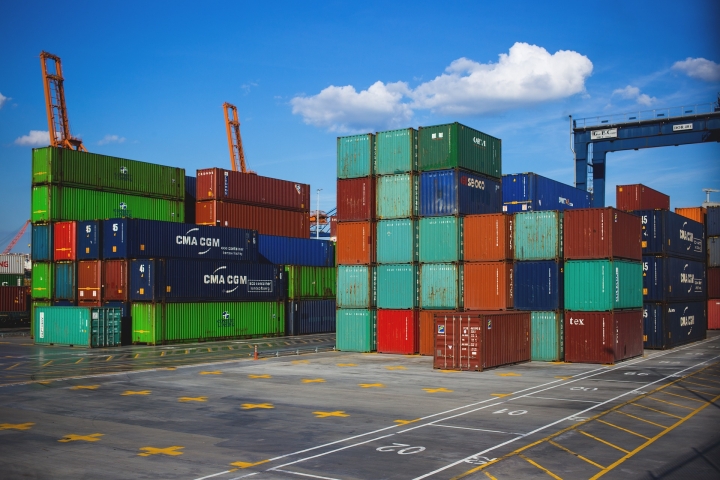
Seventy years after a converted oil tanker carried the first standardised steel boxes from New Jersey to Texas, the shipping container remains the basic unit that global trade is built on.
A recent Financial Times feature examined how that system, having driven down the cost of moving goods to a small fraction of what it once was, is now running into pressure from port congestion and a widening gap between the volume of goods arriving in the West and the amount travelling back the other way.
The latest data from the Office for National Statistics shows UK goods exports fell by 2.1% across 2025 which prompted William Bain, Head of Trade Policy at the British Chambers of Commerce to warn about the uncertainty for UK trade prospects, earlier this year.
Cleveland Containers, part of Cleveland Group, a leading UK supplier of shipping containers and container conversions, works with businesses across the country that depend on the same network to move goods, materials and equipment. Here, they offer their insights on the changing shape of global trade and the role of shipping containers in a new era.
UK Exporters are Feeling the Pressure
Shipping containers changed more than the mechanics of shipping when they were standardised in the 1960s. It also determined which countries could realistically compete for manufacturing and export work, by making it cheap enough to move goods across oceans that distance stopped being a barrier.
“That shift is part of the reason why the current slowdown in UK exports matters so much,” said Andrew Thompson, CEO at Cleveland Containers. “Freight rates, longer transit times and rising insurance costs all add friction to getting goods out of the country, and that lands hardest on exporters who are already competing on tight margins.”
The British Chambers of Commerce has referenced Office for Budget Responsibility forecasts pointing to cooler export growth this year, following a decline in goods exports across 2025. Thompson argues that businesses reliant on shipping should expect this kind of volatility to continue.
“Global shipping has been through several years of disruption now, from Red Sea rerouting to capacity being tied up elsewhere,” he said. “Exporters who build flexibility into how they source containers and plan shipments are likely to cope with that volatility better.”
Ports are Racing to Keep Pace
The pressure on exporters is matched by pressure on the ports handling the goods. DP World’s expansion of London Gateway, which will add two new berths capable of taking the world’s largest container ships, is expected to make it Britain’s largest container port within five years of the project’s approval.
Similar investment has been under way elsewhere, with the British Ports Association tracking hundreds of millions of pounds committed across ports including Belfast, Liverpool and Leith.
“Ports were not built with today’s ship sizes in mind, so expansion has become a permanent feature of the industry,” said Thompson. “For businesses, that means paying attention to which ports are investing and which routes are under strain, because that increasingly determines lead times as much as the shipping schedule itself.”
A Second Life for Retired Containers
It’s estimated that around 1.8 million 20ft containers sit idle at any given time, roughly equivalent to the carrying capacity of the world’s eighth largest shipping line. That build-up of empty containers can leave vessels queuing for berth space to unload, adding to both the cost and the time it takes to move goods, and leaving ports themselves carrying much of that burden.
Repurposing surplus containers rather than leaving them stacked at port is one way the industry can ease that pressure while giving retired stock a useful second life. Small Business UK reported that UK self-storage space using containers grew by more than 7% in the past year, with firms using them for overspill warehousing, secure on-site stores and temporary workspaces.
“A container coming off a shipping route still has plenty of useful life left in it,” said Thompson. “We convert containers into offices, canteens, workshops and self-storage units for customers across construction, agriculture, retail and education, and demand for that kind of flexible space keeps growing. It’s a practical way for the industry to get more value out of stock that would otherwise sit unused while the wider shipping network works through its own problems.”
Global trade may look different over the next fifty years, but the steel box that helped build it has now become part of the operational backbone of UK business.